Do Carrots Really Help Your Vision? The Surprising Connection Between Nutrition, Eye Health, and Brain Health
Posted On October 16, 2026
We’ve all heard it growing up: “Eat your carrots! They’re good for your eyes!” But is there actually any truth to this advice?
As it turns out, Mom wasn’t entirely wrong! Carrots really do contain nutrients that support healthy vision. However, there’s much more to the story when it comes to the connection between what we eat, how we see, and even how our brains function.
Last night, Dr. Lou and I represented Signature Eye Care at the Austin premiere of A Vision for Vision, a fascinating documentary that explores this very connection.
And let’s just say, it gave me even more reasons to talk about the importance of nutrition and eye health!
A Special Night with Our Vision Source Family
We were thrilled to join fellow Vision Source colleagues in Austin for a special screening of A Vision for Vision, a documentary directed and produced by two-time
Emmy Award winner Wayne Chesler.
The film follows Professor John Nolan’s 20-year scientific journey exploring one of modern science’s often-overlooked frontiers: the powerful relationship between nutrition, vision, and brain health.
What made the evening even more memorable was the opportunity to participate in a special Q&A session with Professor Nolan and Wayne Chesler following the screening.
As eye care professionals, we spend our days helping patients see clearly, but this documentary was an important reminder that healthy vision goes far beyond glasses, contact lenses, and even the eye exam chair.
What we put into our bodies can play a significant role in protecting our eyes and supporting our overall health.
And that brings us back to those carrots!
So, Do Carrots Really Improve Your Eyesight?
The short answer? Yes, carrots support eye health, but they won’t give you superhero vision!
Carrots are rich in beta-carotene, which our bodies convert into vitamin A. Vitamin A is essential for maintaining healthy vision, particularly in low-light conditions.
Without enough vitamin A, people can develop night blindness and, in severe cases, other serious eye problems.
But here’s the catch: If you’re already getting enough vitamin A, eating extra carrots won’t magically improve your prescription, eliminate your need for glasses, or give you perfect 20/20 vision.
Sorry, carrot lovers!
The real secret to supporting healthy eyes is eating a variety of nutrient-rich foods, not just loading up on one particular vegetable.
Move Over, Carrots! Meet the Other Superfoods for Your Eyes
One of the most interesting connections highlighted by the research behind A Vision for Vision involves nutrients called carotenoids, particularly lutein, zeaxanthin, and meso-zeaxanthin.
These nutrients are especially important because they’re found in the macula, the small central area of the retina responsible for sharp, detailed vision.
Think about all the things you rely on your central vision for every day: reading, driving, recognizing faces, and scrolling through your phone.
These carotenoids help form what’s known as macular pigment, which filters some high-energy blue light and helps protect retinal tissue from oxidative stress.
So, where can you find eye-friendly nutrients?
-
Spinach and kale: Rich in lutein and zeaxanthin, which support macular health.
-
Egg yolks: Contain lutein and zeaxanthin in a form the body can absorb.
-
Orange and yellow peppers: Provide carotenoids and vitamin C.
-
Salmon and other fatty fish: Provide omega-3 fatty acids, important components of retinal cells.
-
Oranges and strawberries: Excellent sources of vitamin C, an antioxidant that supports healthy tissues.
-
Nuts and seeds: Provide vitamin E, which helps protect cells from oxidative damage.
-
Carrots and sweet potatoes: Supply beta-carotene, which the body can convert into vitamin A.
The takeaway? Eat the rainbow! A colorful plate doesn’t just look good; it can help provide the nutrients your eyes need.
Wait… What Does Your Brain Have to Do with Your Vision?
This is where things get especially interesting!
Your eyes and brain work together constantly. Your eyes capture visual information, but your brain is responsible for processing and interpreting what you see.
In fact, seeing clearly involves much more than simply having healthy eyeballs!
Professor Nolan’s research explores how macular carotenoids may influence not only eye health but also aspects of brain function.
Lutein and zeaxanthin are found in both the retina and brain tissue, making them particularly interesting to scientists studying the relationship between nutrition, visual performance, and cognitive health.
Research has examined whether improving carotenoid intake and macular pigment levels may benefit certain aspects of visual function and cognition.
While this is a promising area of research, scientists are still investigating how much these nutrients can improve specific outcomes and who may benefit most.
The big picture is that taking care of your eyes and taking care of your brain may have more in common than you realize.
Can Eating the Right Foods Prevent Eye Diseases?
Good nutrition can support long-term eye health, but it’s important to understand that no single food can guarantee protection against eye disease.
Research has shown that certain combinations of vitamins and minerals, including the AREDS2 supplement formula, can help reduce the risk of progression to advanced age-related macular degeneration (AMD) in people with specific stages of the disease.
However, these supplements aren’t recommended for everyone, and they aren’t a substitute for a balanced diet or regular comprehensive eye exams.
Other conditions, such as glaucoma, diabetic retinopathy, and cataracts, involve multiple risk factors, including genetics, age, medical history, and lifestyle.
That’s why we always encourage patients to take a comprehensive approach to their eye health.
What If Your Diet Isn’t Giving Your Eyes Everything They Need?
Let’s face it. Even with the best intentions, most of us aren’t eating spinach, kale, and other nutrient-packed foods at every meal.
And while a balanced diet should always be the foundation of good nutrition, some patients may benefit from additional nutritional support.
That’s where MacuHealth comes into the conversation!
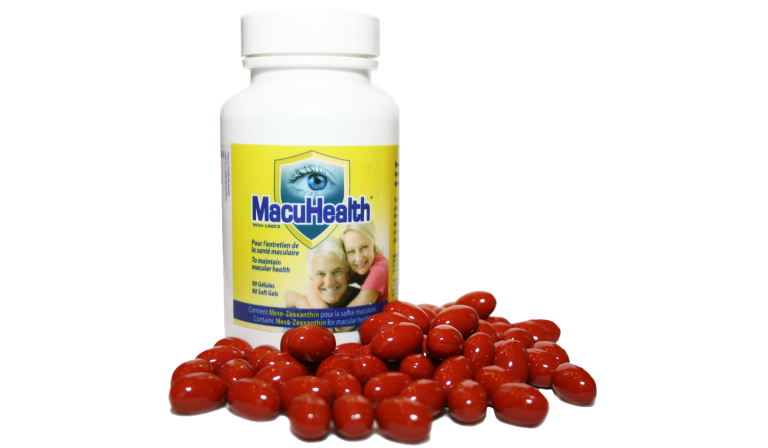
At Signature Eye Care, we’re proud to offer MacuHealth, a nutritional supplement designed to support macular health.
What’s particularly exciting is how closely its ingredients relate to the science explored in A Vision for Vision.
MacuHealth contains three important macular carotenoids:
-
Lutein: Helps protect retinal cells from oxidative stress and supports healthy macular pigment.
-
Zeaxanthin: Works alongside lutein to help filter certain wavelengths of blue light and support the macula.
-
Meso-zeaxanthin: A carotenoid concentrated in the central macula that contributes to macular pigment.
Together, these nutrients help maintain macular pigment, which plays an important role in supporting healthy central vision.
Studies have shown that carotenoid supplementation can increase macular pigment levels in some individuals. Researchers continue to investigate whether these changes can translate into improvements in visual performance and cognitive function.
Of course, supplements aren’t magic pills. MacuHealth won’t replace your glasses, cure an eye condition, or guarantee that you’ll never develop an eye disease.
But it can be one option worth discussing with your eye doctor as part of an overall approach to eye health.
Interested in MacuHealth? We Have It Right Here!
Patients can purchase MacuHealth directly from our office at Signature Eye Care!
Our doctors and team members would be happy to answer your questions about MacuHealth, explain how its ingredients support macular health, and help determine whether it’s an appropriate supplement for you.
It’s important to remember that patients with certain stages of macular degeneration may need a specific AREDS2 supplement formula, so we always recommend discussing nutritional supplements with your eye doctor before starting them.
What We Took Away from A Vision for Vision
Attending this premiere with our Vision Source family was more than just a fun evening at the movies.
It was an opportunity to learn about emerging research, hear directly from the people helping bring that research to light, and reflect on how we can continue educating our patients.
At Signature Eye Care, we’re passionate about staying informed about developments in eye care, whether that’s the latest lens technology, innovative diagnostic equipment, new treatment options, or the role nutrition plays in maintaining healthy vision.
The documentary reminded us of something we believe strongly:
Taking care of your vision isn’t just about seeing better today. It’s about protecting your ability to see and experience the world for years to come.
I’m grateful to have had the opportunity to attend this special premiere and Q&A with Professor John Nolan and Wayne Chesler, alongside our wonderful Vision Source community.
Healthy Eyes Start with Healthy Habits
So, should you keep eating your carrots?
Absolutely! Just don’t forget the spinach, eggs, salmon, and other colorful foods along the way.
Here are a few simple ways to give your eyes some extra love:
-
Eat a balanced diet filled with colorful fruits and vegetables.
-
Include foods rich in lutein, zeaxanthin, and omega-3 fatty acids.
-
Ask your eye doctor whether a nutritional supplement like MacuHealth may be appropriate for you.
-
Protect your eyes from harmful UV exposure with quality sunglasses.
-
Take regular breaks from digital screens to reduce eye strain.
-
Manage health conditions such as diabetes and high blood pressure.
-
Schedule regular comprehensive eye exams, even when your vision seems perfectly fine.
Your Vision Deserves More Than Just Carrots!
At Signature Eye Care, we believe patient education is just as important as providing exceptional eye care.
Our doctors and team are here to help you understand your vision, monitor your eye health, and make informed decisions about protecting your eyesight.
Whether it’s discussing nutrition, evaluating your retinal health, helping you learn about MacuHealth, or finding the right vision solutions for your lifestyle, we’re committed to helping you see your best at every stage of life.
Curious about MacuHealth? Ask us about it during your next visit! MacuHealth is available for purchase right here at Signature Eye Care.
Ready to give your eyes the attention they deserve?
Schedule your next comprehensive eye exam with Signature Eye Care today!
Visit www.signatureeyecare.com
Because great vision isn’t just about what you see. It’s about how you care for your eyes along the way!