When Should Kids Get an Eye Exam
As a parent, you keep track of every milestone from first steps to first words. You know everything there is to know about your kid from their strengths to their quirks, but it’s hard to tell when a quirk is a serious concern. When a baby first gets their teeth, you start planning dentist visits every six months. From birth you have a vaccine schedule that you follow for their health and protection. However, no one talks about how important it is for children to get eye exams regularly.
Early childhood visual health sets the stage for how children learn and experience the world around them. The best thing you can do to set your kid up for long-term success is to know how often to have their eyes checked and what warning signs to watch for.
What Makes Up a Child’s Vision
When we talk about a child’s vision, we are looking at much more than just their ability to read a poster from across the room. True visual health includes how well their eyes work together as a team, their hand-eye coordination, and how comfortably they can switch their focus from a tablet to a teacher. Because kids adapt so quickly, they rarely realize their blurry sight or tired eyes are abnormal. They just assume everyone sees the world exactly the way they do. That is where a regular visit to your local eye doctor makes all the difference. Routine checks allow us to spot minor vision problems and intervene early, before those issues start causing frustration with homework or sports.
The Recommended Eye Exam Schedule
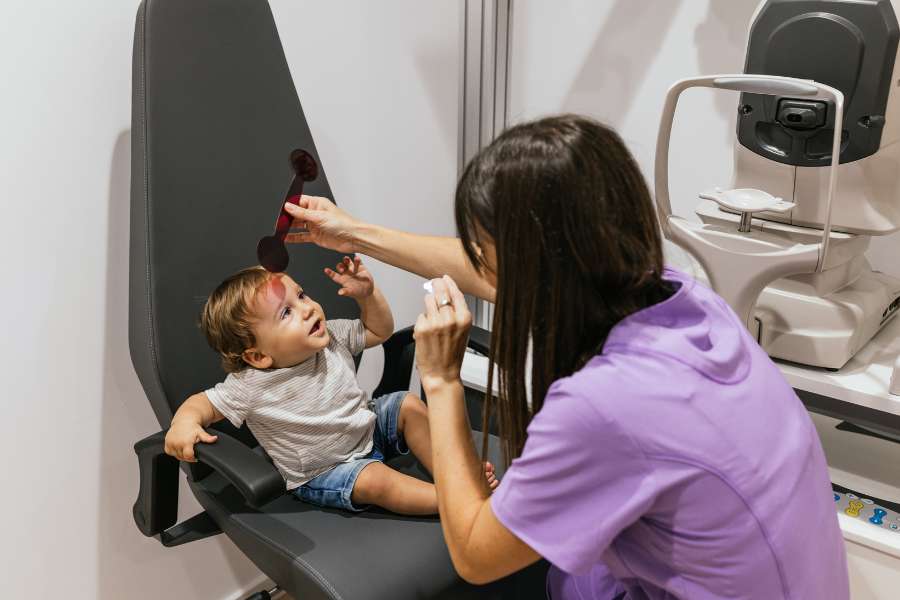
A lot of parents assume a quick vision screening at the pediatrician’s office is enough to catch any eye conditions. While those basic checks are wonderful for spotting obvious eye alignment issues, they simply cannot replace a full evaluation of your child’s visual system. The American Optometric Association has put together a helpful timeline to ensure your child maintains good vision throughout their development. To keep your kid on track, we suggest following this general age-by-age guide:
- Infants: A first eye exam around six months of age to assess basic tracking and eye health.
- Toddlers and Preschoolers: A second eye exam between ages three and five to evaluate their readiness for learning.
- School-Age Children: A third eye exam right before entering first grade, followed by annual visits.
Naturally, there are always exceptions to this schedule. Newborns with a family history of eye disease or a premature birth may need their eyes examined much sooner by a pediatric specialist. Likewise, if you ever notice your little one struggling to focus or complaining about their eyes, trust your gut and schedule a comprehensive eye exam immediately.
Here at Signature Eye Care, our pediatric eye care services officially begin when your child turns four. This age hits a sweet spot right before kindergarten, giving us the perfect opportunity to make sure their eyes are completely ready for a classroom environment. Once they start school, kids who need vision correction like glasses or contact lenses will need to visit us every year to keep their prescription updated and their eyes feeling great.
Signs Your Child Needs to See an Eye Doctor
Sometimes a child’s eyes will tell you they are struggling long before they have the vocabulary to explain it. We want to catch any vision issues early to prevent learning delays or frustration at school. Watch for these behavioral red flags that warrant a trip to the eye doctor:
- Sitting extremely close to the TV or holding books right up to their face.
- Tilting their head or closing one eye to see clearly.
- Complaining of frequent headaches or tired eyes after reading.
- Showing visible crossed eyes or an eye turn.
If you notice your child heavily favoring one eye, they might be masking poor vision in the other. A great way to test this at home is to play a simple game of peek-a-boo with young toddlers to assess their reaction. If you cover one eye and they giggle, but they get fussy and push your hand away when you cover the other, they might be relying on that single good eye to see.
What Happens During a Comprehensive Eye Exam
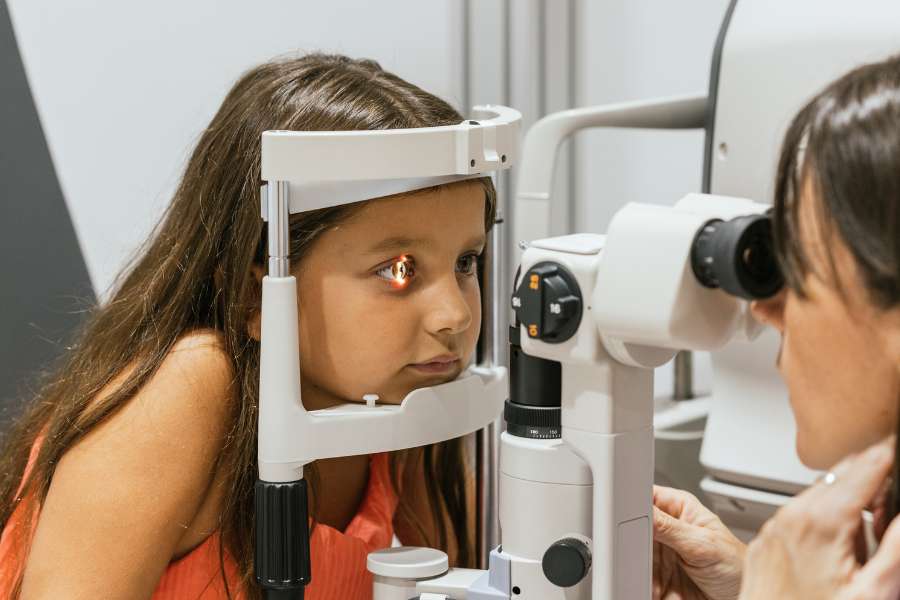
We start every visit by chatting with you about your child’s overall health and any eye or vision problems you have noticed at home. Next, we test visual acuity using age-appropriate methods. For kids who do not know their letters yet, we use shapes and matching games to assess their sight in a way that feels like playtime.
Many parents and children dread the pupil dilation portion of the eye exam. The good news is that we offer Optomap Retinal Exams for just $39. This advanced technology gives us a painless 210-degree view of the back of the eye without the need for stinging dilation drops, keeping the experience positive and stress-free. We also use the Zeiss i.Profiler plus, which measures the eye to a fraction of a diopter to give us incredibly precise data on their visual system.
Tests and Procedures We Use
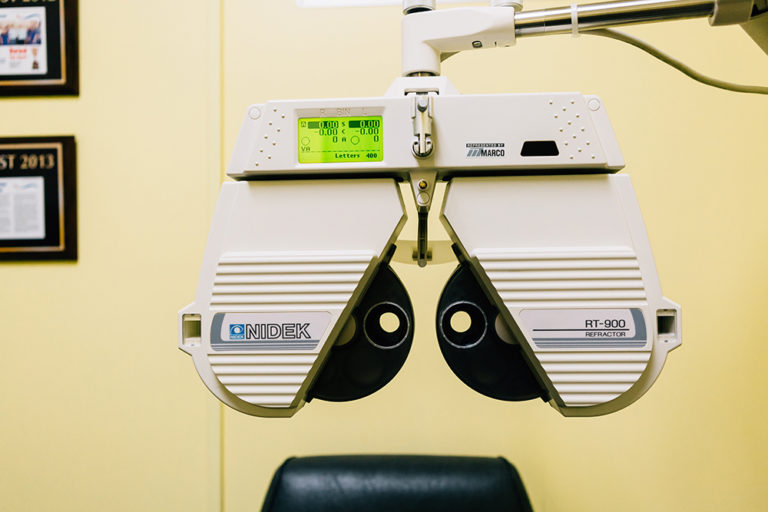
A full eye exam goes well beyond reading a chart on the wall. We use a variety of non-invasive tests to fully evaluate your child’s visual system. Our team relies on a few key objective screening tools to measure how well their eyes work:
- Binocular Vision Testing: We check eye alignment, tracking, and how well the eyes work as a team.
- Objective Refraction: We use specialized instruments to estimate their prescription without needing them to answer “which is better, one or two” perfectly.
- Color Vision Testing: A quick check to ensure they can distinguish different hues accurately.
Common Pediatric Eye Conditions
Catching vision issues early prevents minor struggles from turning into major roadblocks. Nearsightedness, farsightedness, and astigmatism are the most common refractive errors we treat in kids. We also carefully screen for amblyopia, commonly known as lazy eye, and misaligned eyes. Identifying these common eye conditions promptly is crucial because the visual system is most responsive to treatment during a child’s early developmental stages.
Childhood myopia
Childhood myopia, or nearsightedness, is a specific area of focus for our practice. By implementing myopia management early, we can slow down the progression and keep their prescription low over time.
Myopia (nearsightedness) is becoming more common in children every year, and it tends to get worse over time if nothing is done about it. Without intervention, nearsightedness typically progresses year after year. This does not just mean thicker glasses; it also increases the risk of serious eye health conditions like retinal detachment or glaucoma later in life. Myopia management is different from regular glasses or contacts because it works to slow how quickly your child’s nearsightedness progresses, not just correct what’s already there. Starting early is what makes the biggest difference. When we step in while a child’s eyes are still growing, we can keep prescriptions from climbing as fast, lower the risk of serious eye conditions later in life, and help your child feel more comfortable reading, learning, and playing. Early detection is often the key, and a simple exam is the place to start.
Diagnosis and Referral Pathways
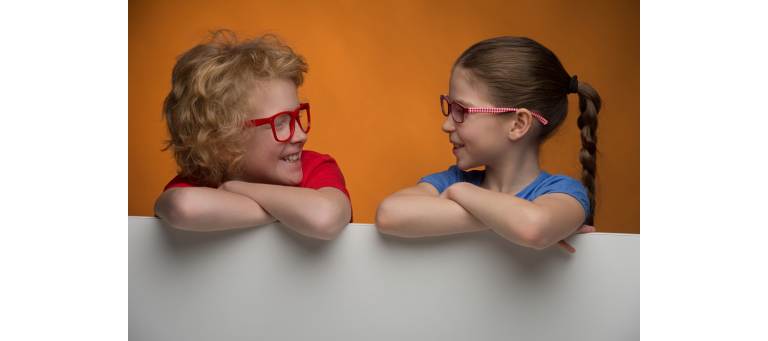
Most common eye conditions can be treated right here in our office with glasses, contact lenses, or targeted vision therapy. If your child needs glasses, our optical boutique carries a massive inventory of over 1,800 frames. Kids can choose from durable, stylish options like Ray-Ban or Kate Spade while parents enjoy the convenience of our in-house lab, which allows many single-vision lenses to be crafted in just one hour.
If we uncover a complex medical eye disease or a structural abnormality, we will facilitate a referral to a trusted local pediatric ophthalmologist. We always make sure you have a clear understanding of the treatment options and the recommended timeline for specialized care.
Preparing Your Child for Their First Visit
The eye doctor is a completely new environment for a young child, and new places can be overwhelming. Here are some tips to help prepare:
- Talk to your child beforehand and explain that we are just going to play some looking games and take some cool pictures of their eyes.
- Try to schedule the appointment for a time of day when your child is well rested and fed.
- Bring a favorite toy or blanket to help them feel comfortable in the exam chair.
Managing Ongoing Eye Health at Home
Protecting your child’s visual health is an everyday team effort. Encourage plenty of outdoor play, which research shows can actually help delay the onset of nearsightedness. Set age-appropriate rules for screen time to reduce eye strain. We highly recommend teaching them the 20-20-20 rule. For every 20 minutes of near work, have your child look at something 20 feet away for 20 seconds. Keeping a log of any sudden changes in vision or family history updates will also give us valuable context at their next appointment.
When to Seek Immediate Care
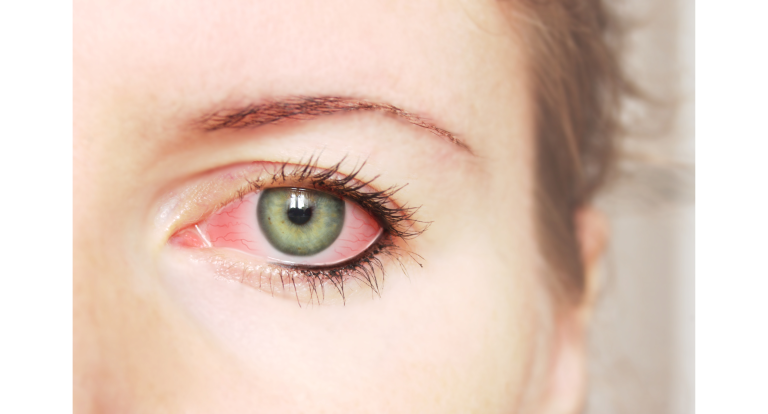
Routine exams handle the basics, but some situations require urgent attention to protect your child’s overall well-being. Seek immediate medical care if your child experiences a sudden loss of clear vision or extreme eye pain. You should also call us or visit an urgent care center right away for any blunt trauma to the eye, chemical exposures, or visible bleeding. Sudden, drastic changes in eye alignment also warrant a prompt evaluation.
Prioritizing Your Child’s Vision
Staying on top of your child’s eye care gives them the best possible foundation for the classroom and the playground. From those early check-ins at age four to managing the visual demands of middle school, catching minor issues early prevents major struggles later. Watch for the subtle signs of vision fatigue and stick to a consistent exam schedule to keep their eyes healthy and strong.
When was your last exam? Healthy vision starts here. Schedule an appointment to protect your eyesight.